Alberta takes symbolic stand against federal hate crime law, says it silences speech
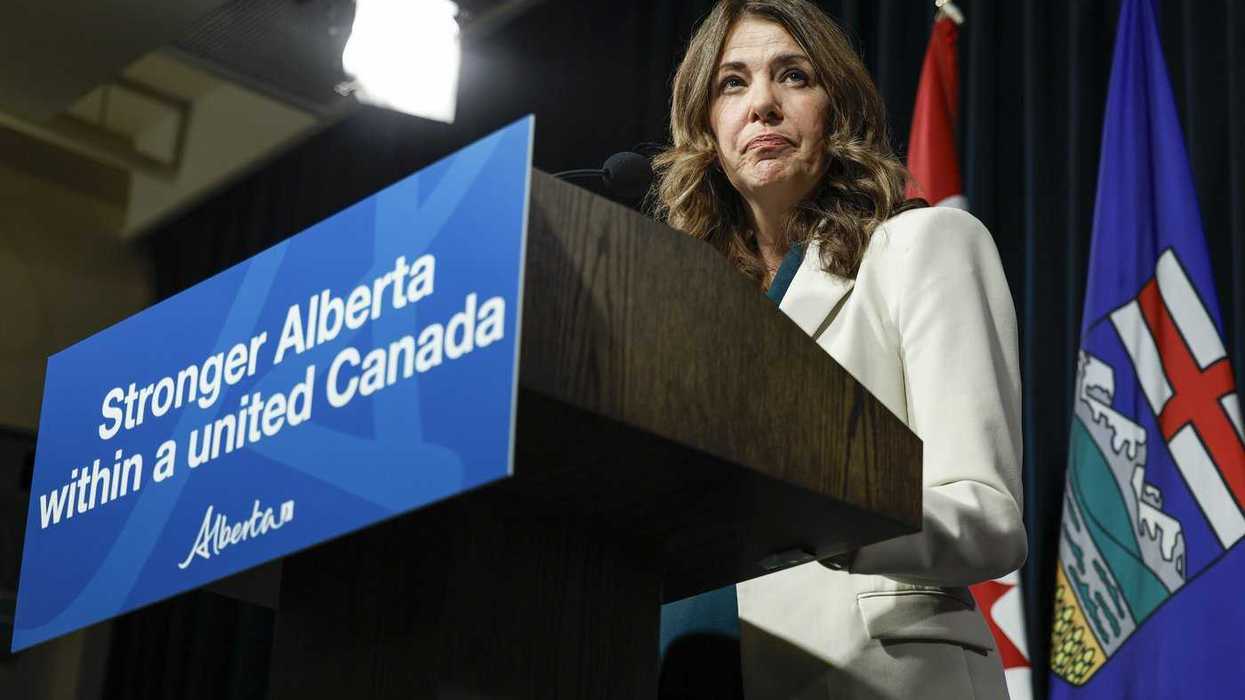
Alberta's government is taking a symbolic stand against Ottawa's decision to remove religious speech as a defence to hate crimes, although it acknowledges it already gets final say on whether many cases get prosecuted.
Premier Danielle Smith told a news conference Tuesday that she's concerned the change by Ottawa, which took affect earlier this year, will have a silencing effect.
And she said she doesn't want pastors "hauled off to jail."
"People shouldn't have to hide their faith to feel secure in their place in this province," Smith said.
"I don't think anyone wants to see their pastor, or their rabbi or their imam monitored in their sermons or arrested and prosecuted."
Ottawa says its law captures speech made with the intention of promoting hatred or antisemitism. Sermons, scripture readings and other religious teachings delivered in good faith don't meet the standard for potential criminal activity, says a backgrounder on the law.
A spokesperson for federal Justice Minister Sean Fraser said Tuesday that Ottawa agrees everyone must be free to practise their faith and express their religious beliefs.
The right to do so is protected under the Charter of Rights and Freedoms, the office said.
"The law strengthens the Criminal Code by giving law enforcement stronger tools to respond to hate-motivated crime and protect our communities," it said.
Smith said her government would soon invoke her sovereignty act in the legislature and table a motion outlining Alberta's intention to push back against the law. She provided few details on what action Alberta would be taking.
Smith's government has already told police and Crown prosecutors that it doesn't want to see hate crimes considered a priority.
Mickey Amery, Alberta's justice minister, currently has the final say on whether many hate-related cases are prosecuted in court, including wilful promotion of hatred.
Amery, speaking alongside Smith, acknowledged that authority but said the sovereignty act motion would ask cabinet ministers to come up with "further lawful measures" that Alberta could take to push back.
"It confirms to Albertans exactly where we stand on this particular issue," Amery said of the motion.
Smith said her opposition to Ottawa's removal of the religious speech defence doesn't mean her United Conservative Party government supports hate-motivated crime.
"Alberta can and will protect public safety while also standing up for fundamental freedoms," she said.
In August, the premier and her public safety minister criticized the Edmonton police for a social media post encouraging people to report hate crimes.
"We don't believe in policing unpopular or religious-based statements even if they are controversial," Smith said in her own social media post at the time.
Opposition NDP Leader Naheed Nenshi described the government's motion and comments as "meaningless" theatre ahead of the UCP's annual gathering this weekend in Calgary.
"They need to throw some red meat to the base, so they're trying to open yet another chapter in the culture wars," Nenshi said.
"If you want to change the law, lobby the federal government to change the law."
Smith said her sovereignty act motion has nothing to do with the UCP gathering and that Ottawa's law affects everyone.
"We have probably the vast majority of Albertans who attend some kind of religious ceremony on a weekly basis. And because the federal government chose to make speech from the pulpit and scriptorial references a potential form of criminal prosecution, we had to step in," the premier said.
"I don't think you wait for the overzealousness in policing or prosecution on this matter, when we've already heard loud and clear that people don't want that."
Smith gave UCP members a heads-up about the sovereignty act motion during a virtual town hall on Saturday, describing the act as a mechanism for protecting provincial rights.
Beyond removing the religious speech defence from the law, Ottawa added that displaying certain symbols, including Nazi emblems and symbols connected to terrorist groups, is promoting hatred.
It's also now an offence to intimidate someone trying to enter a place of worship or cultural centre.
This report by The Canadian Press was first published Nov. 24, 2026.
— With files from Lisa Johnson
By Jack Farrell | Copyright 2026, The Canadian Press. All rights reserved.