Carney set to miss United Nations event due to delays at U.S. airports
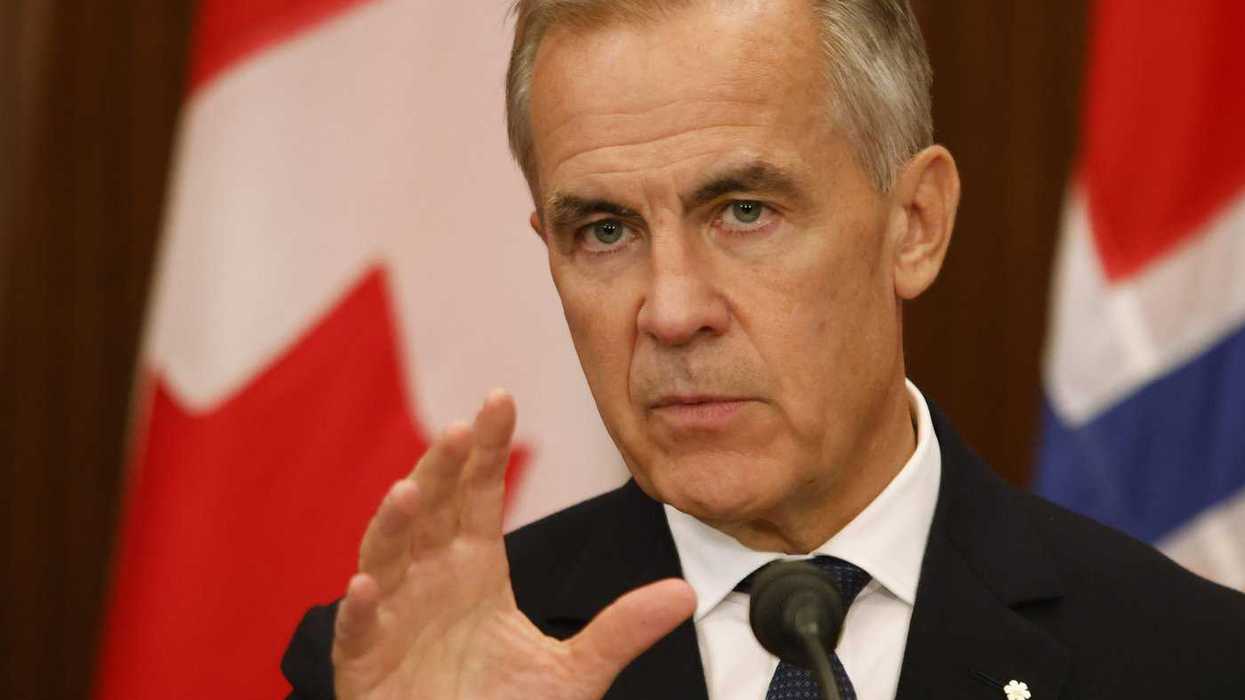
Prime Minister Mark Carney will miss an event at the United Nations General Assembly on Monday because of technical problems at a key regional air traffic control centre that halted operations at every major airport in the New York City area.
Hundreds of flights were cancelled in the U.S. northeast after a key circuit failed at an air traffic facility in Philadelphia. The Prime Minister's Office said Carney is still expected to arrive in New York City later Monday night.
U.S. President Donald Trump's flight left Washington D.C. for New York as scheduled.
Canada's Ambassador and Permanent Representative to the United Nations David Lametti will speak in Carney's place during a roundtable discussion on strengthening multilateral collaboration with European Council President António Costa and Kenya's President William Ruto on the sidelines of the UN General Assembly.
The discussion is taking place at the Partners for Multilateralism summit, or P4M, a gathering of leaders to discuss coalition-building and translating shared principles into practical action.
Carney, Costa, Ruto and Brazilian President Luiz Inácio Lula da Silva co-wrote an opinion piece published Sunday in The Financial Times that argues the global community is more interdependent than ever, "even as it becomes more fragmented and polarized."
They pointed to climate change, global pandemics, financial shocks, conflicts and the closure of the Strait of Hormuz as global crises that require countries to work together.
"Cooperation is therefore not an act of idealism, it is a practical necessity," the leaders wrote. "The question is not whether multilateralism can survive, but how it must evolve to meet the realities of our time."
Trump's return to the White House and his unpredictable tariff campaign have upended global institutions and pushed away traditional allies.
Trump and members of his administration have demanded significant changes to the UN and have held back funding for the institution, putting it in turmoil.
As Trump looks to realign the global order, Carney has emerged in the role of coalition builder — something that appears to irritate the president. Earlier Monday, Trump posted on social media that the United States is working on a "massive Deal with respect to the purchase of Potash from Belarus."
"The pricing would be for substantially less than we are currently paying to Canada, very good news for our Farmers and Ranchers," Trump said.
Details of that proposed deal remain unclear. It's the latest shot Trump has taken at Canada since trade talks broke down in acrimony last month.
On Bloomberg Television on Monday, U.S. Trade Representative Jamieson Greer again accused Canada of ending the trade talks and claimed the escalating tariff war won't have much of an impact on the U.S. economy.
Greer said Canada now wants to "get together" with the European Union. That's a reference to European Commission President Ursula von der Leyen using her state of the union address to the European Parliament last week to open the door to Canada becoming what she called the first “associate member."
"They've been very clear over the past year and a half, they're sovereign. They may want to tie up with the EU now so it raises the question of that whole sovereignty shtick," Greer said.
Trump is set to give a speech in front of the 81st Session of the United Nations General Assembly on Tuesday. Foreign Affairs Minister Anita Anand is set to deliver a speech to the General Assembly later in the week.
Carney, who is scheduled to be in New York City from Monday to Wednesday, is still expected to attend a discussion on the two-state solution in the Middle East on Tuesday and meet with global and business leaders on the sidelines of the event.
For nearly a year now, Carney has been promoting the idea of bringing countries around the world together to pursue what he has called "shared interests, and occasionally shared values, rather than shared institutions."
Carney has sought to build a bridge between the EU and a Pacific Rim trading bloc called CPTPP so that middle powers can better resist economic coercion by the U.S. and China.
This report by The Canadian Press was first published Sept. 21, 2026.
— With files from Dylan Robertson in Ottawa
By Kelly Geraldine Malone | Copyright 2026, The Canadian Press. All rights reserved.