Distilleries to bear brunt of U.S. ban on Canadian booze: experts
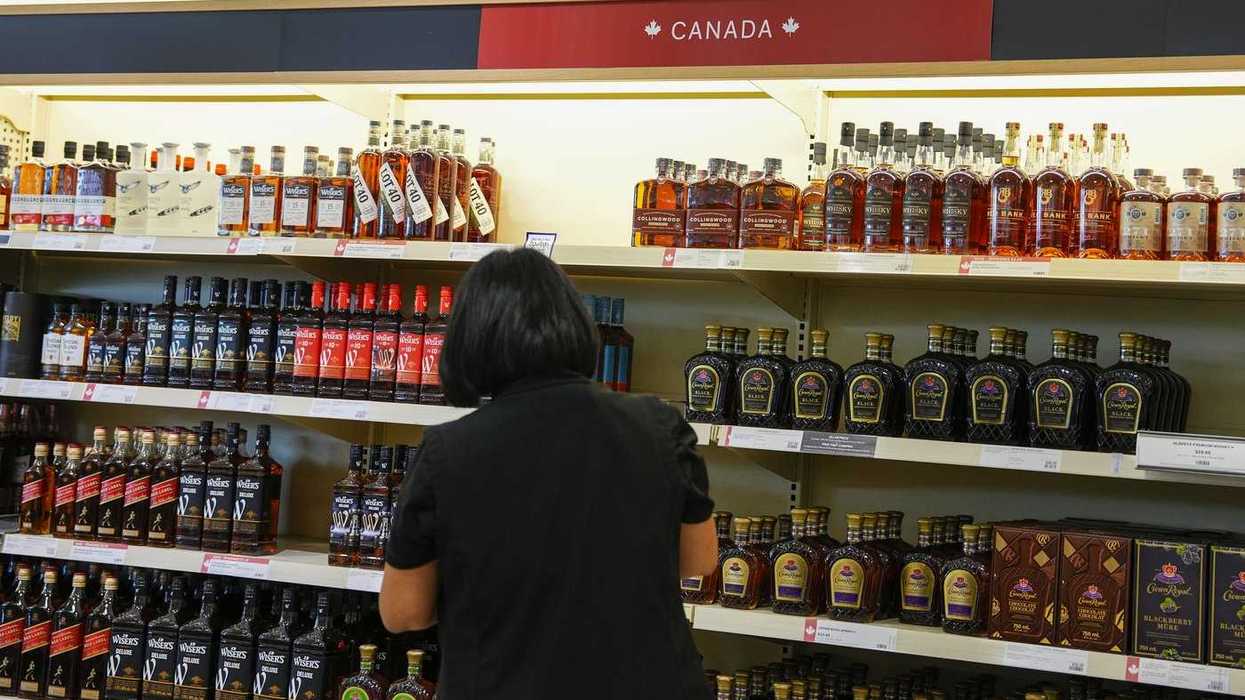
Distilleries and spirit makers are likely to be the hardest hit among Canadian alcohol producers as the United States proposes a broad ban on Canadian booze starting later this month.
Craig Johnston, chief economist at Farm Credit Canada, said distilleries ship more than half of their overall product across the border.
"If you think about different categories of the alcohol industry — distilleries, wineries and breweries — it's really distilleries which have significant exposure to the U.S. market," he said.
Johnston said it will be challenging for many distilleries that sell stateside to find alternative homes for their products domestically, in Europe or elsewhere.
Canada's retaliatory duties earlier this week prompted U.S. President Donald Trump to ban most imports of Canadian alcohol, among a long list of other items, starting Sept. 29.
Canadian whisky and liqueur in bottles larger than four litres will be exempt from the ban; however, Cal Bricker of trade association Spirits Canada said there are not many four-litre bottles that get sold anyway.
"For all intents and purposes, it's more or less a ban on Canadian whisky," he said in an interview.
Spirits Canada represents manufacturers, marketers and exporters in the industry.
The solution for distilleries is not as easy as moving production south of the border, because of legal agreements and intertwined supply chains, Bricker said.
"You can only make Canadian whisky in Canada. You can only make American whiskey bourbon in the U.S. And you can make tequila in Mexico," he said.
That's true for alcohol producers like Diageo, for instance, which makes Crown Royal domestically, Bulleit Bourbon in the United States and Don Julio tequila in Mexico.
"A hundred years ago, you could identify a company in a country and target it and hit it specifically and hurt it," Bricker said.
"You can't really do that now because the supply chain is so integrated that if you're trying to retaliate against Diageo in the United States, well, it's one balance sheet that manages the whole business."
So far, Bricker said he hasn't heard from any of the 11 distilleries and spirit makers represented by the association about moving production south of the border.
Andrew Oland, chief executive of Moosehead Breweries, said he wasn't surprised but still "very disappointed" to see alcohol further dragged into the latest trade escalation.
Oland, who heads the Saint John, N.B.-based brewery, said 15 per cent of its beverages get shipped south and are already facing steep duties after trade negotiations between the two countries fell apart last month.
The brewery is currently absorbing the cost of 50 per cent tariffs and focusing on shipping as much beer as possible over the next three weeks to preserve its shelf space and relationship with U.S. retailers.
“If our beer is not on the shelf in the United States, they'll quickly put someone else's beer on, and it can be really tough to regain that shelf space,” he said.
But Oland said he is more of a “beer glass half full” type of person and hopes the situation will resolve before the ban kicks in. At the same time, he said the brewery has been preparing for the long run and looking for marketing beyond the United States.
Robert Carter, a food industry analyst at the StratonHunter Group, said the threatened move has the potential to erase years of work for some smaller players with retail presence stateside.
"They've built pretty strong relationships with the U.S. distributors, restaurants and whatnot," he said. "This is going to impact them more aggressively than some of the others."
Between April 2024 and March 2025, Canada imported $1 billion in alcohol from the United States, down 5.4 per cent from the previous fiscal year, Statistics Canada data shows. Exports to south of the border totalled $1.4 billion, up 4.1 per cent year-over-year.
While some brewers could face challenging times ahead, Canadian beer is overwhelmingly a domestic industry, said Luke Chapman, vice-president of federal affairs at the trade association Beer Canada.
Last year, for instance, more than 90 per cent of all beer bought in Canada was brewed within the country with domestic ingredients, Chapman said.
“Canada's brewing industry is far less dependent on the U.S. market than many other Canadian industries."
Meanwhile, the wine industry is also expected to escape the worst effects of the potential ban, said Norman Beal, board chair of Ontario Craft Wineries, which represents more than 110 wineries in the province.
Beal said only about one per cent of all wine sales come from the United States.
"Canadian wine producers, we're relatively small," Beal said. "Most of our products are sold right here in Canada."
This report by The Canadian Press was first published Sept. 10, 2026.
By Ritika Dubey | Copyright 2026, The Canadian Press. All rights reserved.