Youth go to court to make Canada legally accountable for its role climate crisis
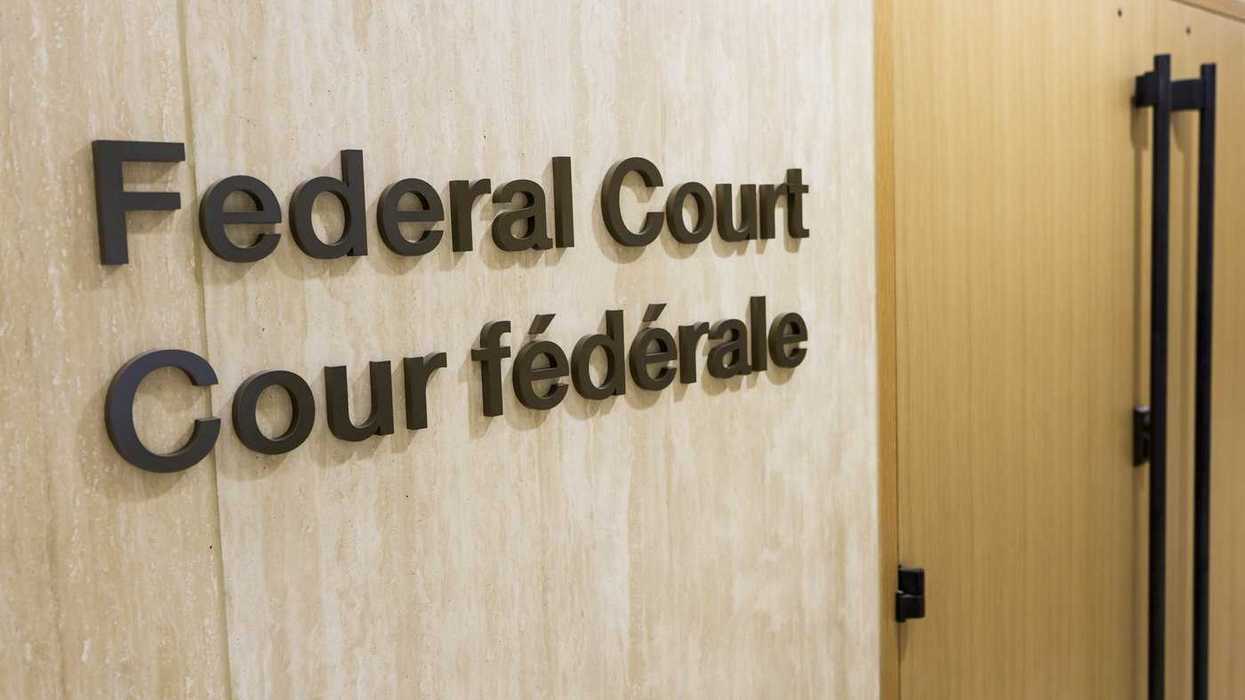
The first youth-led climate trial in Canadian history has begun at the federal courthouse in Vancouver, where 15 plaintiffs argue that federal legislation violates their constitutional rights by continuing the trajectory of greenhouse gas emissions.
Catherine Boies Parker, who is representing the youth plaintiffs, said in her opening statement Monday that the case is not about the existence of climate change but rather whether the government is "constitutionally required to stop making it worse."
"The plaintiffs are asking this court to hold Canada legally accountable for its role in continuing and worsening the climate crisis that is causing harm," she said.
She said the Charter must provide youth a "degree of protection from their own government's actions" that she says are contributing to the "greatest threat to personal security that humans have ever faced."
Boies Parker told the court that her clients are not asking it to develop or implement policies or decide what steps the government should make to mitigate greenhouse gas emissions.
Those decisions should be left to the legislative and executive branches of government, she said.
The role of the court, she said, is to determine if the plaintiffs have a constitutional right to protections.
"When the government acts in a manner that interferes with the physical and emotional integrity of its people, especially its most vulnerable people, the rule of law requires the court to assess whether that interference is consistent with the constitution," she said.
"That responsibility doesn't disappear just because the issues are complex," she said, adding that "unsupervised action may contribute to irreversible harm to children and future generations that have no access to a ballot box."
She said Canada has been aware of the impacts of climate change as far back as 1988, and has "repeatedly recognized" the dangers of greenhouse gases and made commitments to reduce its emissions.
But despite decades of international commitments and legislative promises, Canada has "repeatedly failed to set sufficient targets (and) repeatedly failed to meet those insufficient targets," Boies Parker said.
BJ Wray, counsel for Canada's Department of Justice, told the court in opening arguments that the Charter was "never intended to solve existential crises."
Wray noted the scope of the Charter that protects the right to life, liberty and security of a person will be an issue for the court to grapple with.
To that, Justice Simon Fothergill said he is "mindful that this could have implications" on other issues, such as housing or health care, that are essential to people's well-being but "for which the government doesn't currently recognize a free-standing obligation."
Wray told the court that Canada is in compliance with its international obligations and it has been reducing greenhouse gas emissions since 2005.
"That is the trajectory that we are on."
Wray told the court that the outcome the plaintiffs are seeking "can't be achieved through legal orders" and "can only be achieved through complex international statecraft, over many years."
Wray said the evidence Canada will present will show that eliminating the impacts of global climate change or "providing the plaintiffs with a safe climate system" is not something the country can do on its own.
"Canada's evidence will show that global climate change requires a global solution," and the remedy sought by the plaintiffs is "an outcome that cannot be achieved as there is no way for Canada on its own to ensure a safe climate system," Wray said.
"The charter ought not to be used to impose on Canada an obligation it cannot fulfil on its own, and we say that this claim should be dismissed," Wray concluded.
Boies Parker earlier said she was anticipating the government would say it can't fix climate change on its own, but she argued it can make it better or worse.
The trial comes about seven years after the case was first filed in 2019.
Boies Parker told the court the impacts of climate change have intensified since then, citing the 2021 heat dome in B.C., Canada's record-breaking 2023 wildfire season, flooding and other extreme weather events that she said "have caused physical and psychological harm."
The 15 youth are from seven provinces and two territories and are expected to testify about how they have suffered what their lawyers say are "specific harms connected directly to the government's conduct."
Boies Parker said those harms include respiratory illness worsened by wildfire smoke, displacement due to extreme weather, mental health impacts, such as climate anxiety and loss of cultural connections to the land that has been lost due to climate disasters.
One of the 15 plaintiffs, a Yellowknife native, was the first to testify at the trial.
Kira Young, now 20 and a varsity athlete at McMaster University, recounted being forced to evacuate from her hometown in the summer of 2023 as a wildfire approached. She described feeling "existential dread and instability."
"It felt like a destabilization of everything I had known," she told the court, as she recounted fleeing to Edmonton with her brother and father, while leaving her mother — an essential worker — behind. It was a week before she learned her home was not threatened and they were allowed to return.
"I worry about experiencing something similar in the future," she said.
She has since been diagnosed with Still's Disease, an autoinflammatory disorder that she told the court is "exacerbated by heat and smoke."
Young testified she joined the case about three years ago, when she was 17.
"I am so scared that the suffering and the pain and hardship that I spent the last hour describing is just the beginning of what's to come for me and youth across Canada, but I don't believe that that is destined," she said when asked why she felt compelled to join.
The trial is expected to continue into late November, with closing arguments scheduled for February.
This report by The Canadian Press was first published Oct. 26, 2026.
By Brieanna Charlebois | Copyright 2026, The Canadian Press. All rights reserved.